
Key Takeaways
- Average gross hourly rate for Milan escorts ranges from €150 to €450, depending on experience and market segment.
- Major expenses include venue rental, safety gear, marketing, agency commissions and taxes, which can consume 30‑55% of gross earnings.
- Italian tax law treats escort income as self‑employment; freelancers must file quarterly IVA and annual IRPEF, paying roughly 30‑40% of net profit.
- Operating independently can increase net profit by 15‑25% but adds responsibility for client screening and legal compliance.
- Effective budgeting-setting aside 20% for emergencies, 10% for retirement, and tracking cash flow weekly-helps sustain long‑term financial stability.
When looking at escort services in Milan is a segment of the adult entertainment market where independent or agency‑linked providers offer companionship, often for a fee, to clients in the city of Milan, Italy, the financial picture mixes high income potential with significant overhead. If you focus on escort earnings Milan as a metric, you’ll see a wide range driven by client type, hours worked, and whether you operate solo or through an agency.
1. Income Landscape in Milan
Milan is the capital of Lombardy, a fashion and financial hub in northern Italy. Its affluent clientele and thriving nightlife create a premium market for companionship services. Data collected from industry surveys (2024 Italian Sex Work Report) show three typical earning brackets:
- Entry‑level (new to the scene, limited client base): €150‑€200 per hour, occasional longer bookings add a €500‑€800 flat rate.
- Mid‑tier (established reputation, regular repeat clients): €250‑€350 per hour, with weekend premium rates pushing to €400.
- High‑end (luxury segment, discrete arrangements, foreign tourists): €400‑€450 per hour, plus service fees for travel or exclusive events that can exceed €1,000 per night.
Most escorts work 20‑30 hours per week, mixing short appointments and longer companionship contracts. A typical monthly gross revenue therefore falls between €6,000 and €12,000, with high‑end performers occasionally topping €15,000.
2. Core Expenses That Eat Into Gross Revenue
Every euro earned is shadowed by costs. Below are the most common line items, presented as percentages of gross income based on the 2024 expense survey of 85 Milan‑based escorts.
- Venue &room rental: 10‑15% (shared apartments, hotel rooms, or private studio spaces).
- Safety &security gear (panic buttons, vetted transport, personal alarms): 3‑5%.
- Marketing &online platform fees (modeling sites, photo shoots, SEO tools): 5‑8%.
- Agency commission (if applicable): 15‑25% of each booking.
- Legal &consultation fees (lawyer for contracts, tax adviser): 2‑4%.
- Personal upkeep (wardrobe, grooming, fitness): 4‑7%.
- Cost of living in Milan (food, transport, insurance) that directly supports work life: 5‑8%.
When you add these together, total expenses typically range from 30% to 55% of gross earnings. Independent escorts who avoid agency commissions can shave off up to 20% of costs, but they must cover the other items themselves.

3. Taxation &Legal Costs in Italy
Italian tax law treats income from escort work as self‑employment referred to as "lavoro autonomo" in the Italian fiscal code. The two main obligations are:
- IVA (VAT): 22% on invoices, but many escorts register under the "regime forfettario" (flat‑rate) scheme, which reduces the effective VAT burden to about 5‑7%.
- IRPEF (personal income tax): progressive rates ranging from 23% to 43% on net profit after deductions.
For a typical net profit of €5,000 per month, the annual tax bill under the flat‑rate regime works out to roughly €18,000‑€20,000, i.e., 32‑36% of net earnings. Additional mandatory contributions include:
- INPS (social security): 25‑27% of net profit, granting pension and health coverage.
- Regional surcharge: 1‑2% depending on Lombardy’s fiscal policies.
Working with a qualified tax consultant-often classified under the Italian tax law the body of statutes governing fiscal obligations for individuals and businesses in Italy-can reduce errors and avoid penalties that easily exceed €2,000 per year.
4. Net‑Profit Scenarios: Putting Numbers Together
Below is a simplified monthly cash‑flow model for three representative profiles. Figures are rounded for clarity.
| Profile | Gross Revenue | Total Expenses | Taxable Income | Taxes + Social Security | Net Profit |
|---|---|---|---|---|---|
| Entry‑Level | €6,000 | €2,400 (40%) | €3,600 | €1,350 (37.5%) | €2,250 |
| Mid‑Tier | €9,500 | €3,380 (36%) | €6,120 | €2,250 (36.8%) | €3,870 |
| High‑End | €14,200 | €4,900 (34%) | €9,300 | €3,300 (35.5%) | €6,000 |
Key observations:
- Higher gross rates improve the expense‑to‑revenue ratio because fixed costs (rent, insurance) stay flat.
- Independent work (no agency cut) pushes net profit up by roughly €500‑€800 per month in each tier.
- Tax efficiency gains-using the flat‑rate regime and properly documenting deductions-can shave 5‑8% off the tax burden.
5. Financial Planning Tips for Long‑Term Stability
Even with strong earnings, the irregular nature of bookings demands disciplined money management. Here are actionable habits:
- Build a cash reserve: Allocate at least 20% of each month’s net profit to a high‑yield savings account. This buffer covers downtime, health issues, or legal expenses.
- Separate personal and business accounts: Keeps bookkeeping simple and satisfies INPS audit requirements.
- Track cash flow weekly: Use a spreadsheet or budgeting app to log each invoice, expense, and tax payment. Spotting patterns helps negotiate better rates with agencies.
- Invest in retirement: Contribute to a private pension plan (Pensione Complementare) or a diversified portfolio. The Italian system rewards early contributions with tax deductions.
- Plan for health insurance: Though INPS provides basic coverage, many escorts supplement with private health plans to cover mental‑health services and regular check‑ups.
Combining these habits reduces financial stress and makes the profession more sustainable over years rather than months.
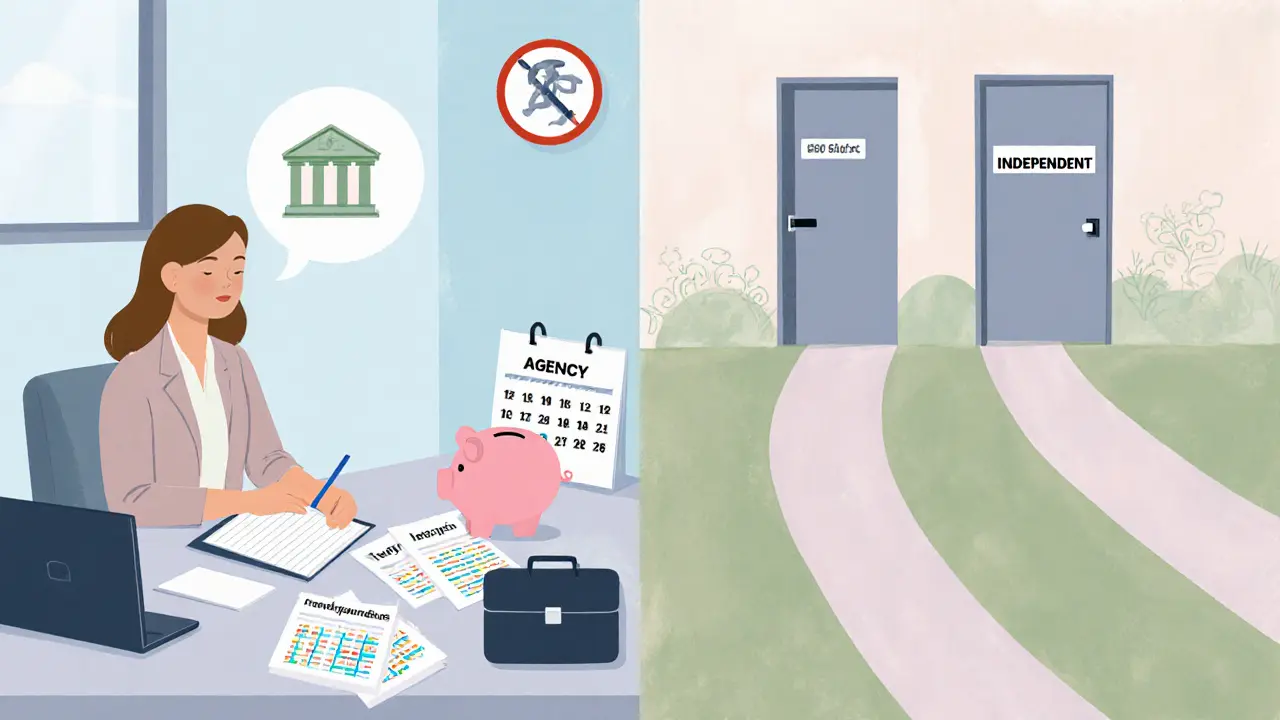
6. Agency vs. Independent: A Direct Comparison
| Factor | Agency Model | Independent Model |
|---|---|---|
| Commission | 15‑25% of each booking | 0% (you keep full rate) |
| Client Screening | Handled by agency, lower risk | Full responsibility, higher risk |
| Marketing Reach | Agency’s platform, steady flow | Self‑managed, requires ads & SEO |
| Legal Support | Included in contract fees | Must hire independent counsel |
| Flexibility | Limited by agency schedule | Full control over hours & rates |
| Net Profit Margin | Typically 45‑55% of gross | Usually 60‑70% of gross |
Choosing the right model depends on personal risk tolerance. New entrants often favor agencies for safety and client flow, while seasoned escorts switch to independence to capture higher margins.
7. Frequently Asked Questions
What is the legal status of escort work in Italy?
Adult companionship is not expressly illegal, but it is not regulated as a protected profession. Practitioners are treated as self‑employed freelancers and must comply with tax and labor laws like any other service provider.
Do I need a VAT number if I work as an escort?
Under the "regime forfettario" (flat‑rate) you can operate without charging standard 22% IVA, paying a reduced contribution instead. However, if your annual turnover exceeds €85,000 you must switch to the ordinary regime and register for VAT.
How can I protect myself from violent clients?
Invest in safety equipment such as personal alarm devices, verified transport services, and a trusted emergency contact network. Use a screening questionnaire and never meet a client alone for the first appointment.
What’s the best way to set rates?
Research local market averages, factor in your experience level, and add a premium for niche services (e.g., multilingual companionship). Start with a baseline (e.g., €250/hour) and adjust based on demand and client feedback.
Can I deduct my wardrobe and fitness expenses?
Yes. The Italian tax code allows deductions for “necessary expenses” directly linked to income generation. Keep receipts for clothing, gym memberships, and beauty treatments; a tax adviser can help classify them correctly.